All work

03 · Virginia Tech Baja SAE · 2026–present

Work in progress · Preliminary design

Electric Power Steering

Developing electric steering assistance for a single-seat off-road competition vehicle, with the goal of reducing driver effort and fatigue.

My focusTorque sensing & controls
TeamPower Steering Subteam
Status · October 2026Preparing for preliminary design review
DESIGN EXPLORERIN PROGRESS
RELATIVE SHAFT ANGLEΔθ = 0°
Preliminary concept · Motion exaggerated

01 / Shaft and torsion-bar assembly

01 / Shaft and torsion-bar assembly

A continuous mechanical path.

Input, torsion bar, output.

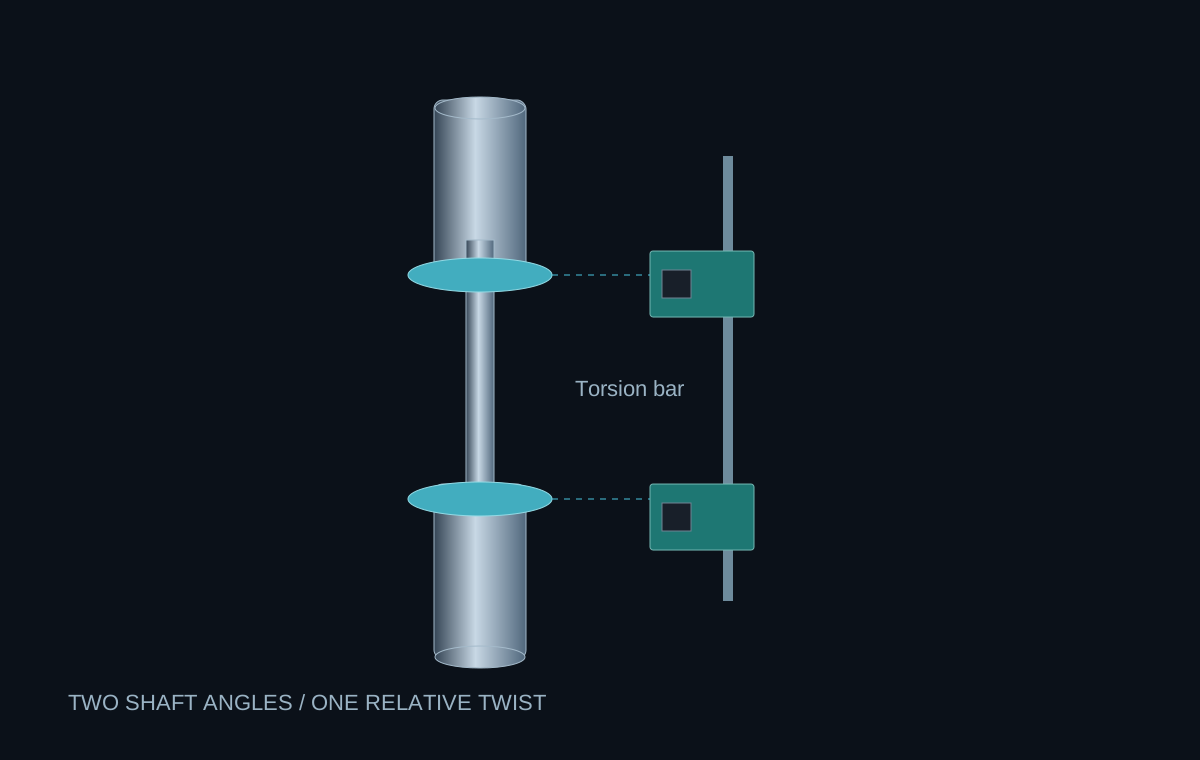
The input shaft connects to the steering wheel; the output shaft continues toward the steering mechanism. A slender torsion bar joins them and deforms elastically under load. The pins and shaft connections shown here follow my preliminary layout sketch.

02 / Two rotating magnets · fixed sensors

Let the magnets turn.

Keep the sensors fixed.

A ring magnet rotates with each shaft. Two separate TMR sensor boards stay on a stationary support alongside the column, each observing its own magnet. Their mounting, alignment, air gaps, and wiring are part of the installed sensing system.

03 / Δθ = θ input − θ output

The difference reveals the effort.

Read relative angle, not just position.

Both shafts can rotate together as the driver steers. Under load, the torsion bar also twists, creating a small difference between their angles. In this illustrative example, 30° at the input and 28° at the output produce 2° of relative twist. The visible deformation is exaggerated for clarity.

04 / Torque estimate → assist logic

From twist to an assist request.

Calibrate before controlling.

With calibrated torsional stiffness kₜ, the controller can estimate driver torque as T = kₜΔθ, using consistent angle units. Angle wrapping, sensor offsets, synchronized sampling, and fault checks matter. Assist logic and a safe disabled-assist response still need implementation and testing.
Early electric column-assist concept from my design portfolio. Geometry and component choices are still evolving.

The challenge

Help the driver
through endurance.

The existing vehicle uses manual rack-and-pinion steering. High steering effort, especially at low speeds, motivates an assist system that fits the current chassis and preserves a direct mechanical steering connection.

The team’s preliminary concept scoring favored high-column assistance. Packaging, power consumption, weight, machinability, cost, and steering assist all informed the comparison.

Current sensing approach

Measure effort,
then command assistance.

My work centers on how the controller reads sensors, estimates driver torque, and commands useful assistance. Two stationary angle sensors read magnets attached to the input and output shafts. The torsion bar connects those shafts and twists slightly under driver load.

Subtracting the corrected angle readings gives the bar’s twist. With known torsional stiffness, the controller can estimate driver torque. Steering angle by itself does not tell us how hard the driver is turning.

01

Read two angles

Input shaft + output shaft

02

Calculate twist

Corrected relative angle

03

Estimate torque

Torsion-bar stiffness

04

Request assist

Controller + motor driver

Before vehicle integration

Test the complete
measurement chain.

The preliminary research evaluates MA600A angle sensing, sensor and magnet packaging, torsion-bar geometry, and controller communication. The small sensing chip is only one part of the installed assembly; boards, supports, connectors, wiring, and magnetic clearances all need space.

The next work includes calibration with known torque, timing checks, assist logic, and fault detection. A disconnected sensor, implausible reading, or lost controller command should lead to disabled motor assistance while retaining mechanical steering. That response still needs implementation and testing.

From the mini portfolio

Three ways to
introduce assistance.

These are early concept-generation sheets. They record the alternatives explored; the later two-sensor torsion-bar arrangement above supersedes the simplified sensing descriptions on these sheets.

Electric column assistance

A motor and spur/helical gear pair add torque to the steering column while preserving the rack-and-pinion layout. The sketch explores a relatively direct mechanical arrangement.

Original concept sheet · Early exploration, not a finalized assembly

Hydraulic rack assistance

A piston-cylinder assists the rack, with a reservoir and valve arrangement. This alternative made the extra plumbing, packaging, and control complexity visible.

Original concept sheet · Early exploration, not a finalized assembly

Electric pinion assistance

A compact motor and planetary gearbox introduce torque at the pinion. The concept trades compact packaging against more involved mechanical integration.

Original concept sheet · Early exploration, not a finalized assembly

Sources: power-steering PDR draft, TMR Sensor Research, Baja concept-generation document, mini design portfolio, and latest résumé. As of October 2026, this is an ongoing senior-design project; vehicle testing and performance improvement have not yet been demonstrated.

Contact

Let’s build
something.

Expanded project image

Scroll to inspect the full-resolution image. Press Escape to close.